
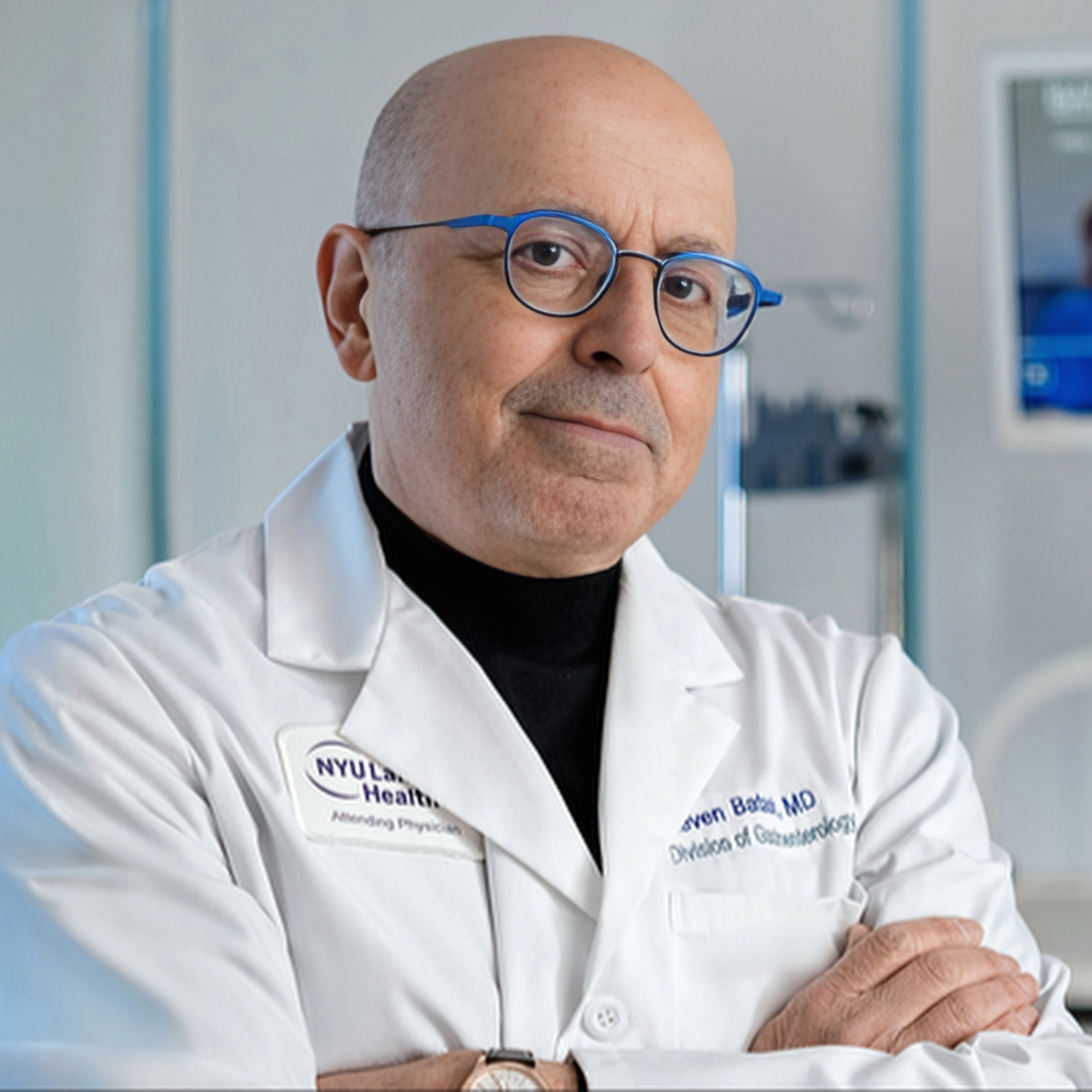
In Dr. Steven Batash's own words
How Dr. Steven Batash describes their own approach, from their TikTok posts. Each statement links to the original.
Specialization
Recovery guidance
- Patients are sent home on the same day as the gastric balloon procedure.TikTok ↗
Statements are quoted or closely paraphrased from Dr. Steven Batash's own public posts and are their claims, not NavMDs' medical advice. Doctors can correct or remove any item via their claimed profile or support [at] navmds.com.
About
Connect with Dr. Steven Batash on Social Media
Specialties
- Board Certified Gastroenterologist
Procedures & Services
Select a service to schedule an appointment · each is approximately 60 minutes
Questions, Answers, and Information Directly from Dr. Steven Batash
Sourced directly from Dr. Steven Batash's social posts and replies.
What patients ask Dr. Steven Batash
Questions people asked under Dr. Steven Batash's TikTok videos, 3 answered by the doctor.
How long does the gastric balloon typically stay in, and what is the removal process like? Is it painful?
asked on TikTok ↗· 110 engagements
If 'Ozempic Face' isn't a direct side effect, what are the actual physiological reasons for facial volume loss during rapid weight loss, and how can it be mitigated?
asked on TikTok ↗· 72 engagements
Are there specific types of alcohol, beyond just 'empty calories,' that can actively hinder metabolism or fat burning for someone trying to lose weight?
asked on TikTok ↗· 60 engagements
What is the typical cost difference between the surgical sleeve and the endoscopic sleeve, and is one more likely to be covered by insurance?
asked on TikTok ↗· 125 engagements· not yet answered
Can you explain the specific side effects that are more common with Mounjaro compared to Ozempic, or vice versa?
asked on TikTok ↗· 98 engagements· not yet answered
What are the long-term success rates for the Endoscopic Sleeve (Suture Sculpt) compared to traditional surgical sleeve gastrectomy, specifically regarding weight regain?
asked on TikTok ↗· 85 engagements· not yet answered
Are you Dr. Steven Batash? 3 of these questions are waiting for an answer. Claim your profile to respond.
Questions are from public comments, shown without the commenter's name. Answers are Dr. Steven Batash's own statements from their videos and replies, not NavMDs' medical advice.
Videos from Dr. Steven Batash
@drstevenbatash on TikTok →Videos posted on TikTok by @drstevenbatash. Press play to watch here, or open the original on TikTok.
Mythbusting “Ozempic Face” Theory
5M views · Jul 2023 · TikTok ↗
Gastric Balloon vs Endoscopic Sleeve Recovery!
3.2M views · Jun 2024 · TikTok ↗
Gastric Balloons - What To Expect!
2.8M views · May 2024 · TikTok ↗
How to succeed with Ozempic
2.7M views · Oct 2024 · TikTok ↗
Benefits of Endoscopic Sleeve *Suture Sculpt*
1.9M views · Aug 2024 · TikTok ↗
The Main Differences Between the Surgical & Endoscopic Sleeve In 30 Seconds!
1.4M views · Jun 2023 · TikTok ↗
Patient Experience
Dr. Steven Batash Review Summary
Ratings from Other Platforms
Main Office
97-12 63rd Dr STE 1D, Rego Park, New York
Book a Service Consultation
Each service is approximately 60 minutes.
Insurance Information
Please contact Dr. Steven Batash's office directly for information about accepted insurance plans.
Help us improve this profile
Do you know which insurance plans Dr. Steven Batash accepts? Share this information to help other patients.
Location & Contact Information
Main Office
97-12 63rd Dr STE 1D
Rego Park, New York 11374
Office Information
Where does Dr. Steven Batash practice?
Doctor's Office
Main Office (Primary)
97-12 63rd Dr STE 1D, Rego Park, New York 11374
Hospital Affiliations
Help improve our data. Confirm if Dr. Steven Batash is affiliated with Batash Medical Center.
Education & Experience
Education
Certifications & Licenses