Sourced directly from Dr. Shanthala Shivananjappa's social posts and replies.
What motivated Dr. Shanthala to specialize in acne scar treatment?
Dr. Shanthala's personal experience with her own children's struggles with acne scarring motivated her to deeply learn how to treat these scars safely and thoughtfully.
What is Dr. Shanthala's approach to initial acne scar treatments?
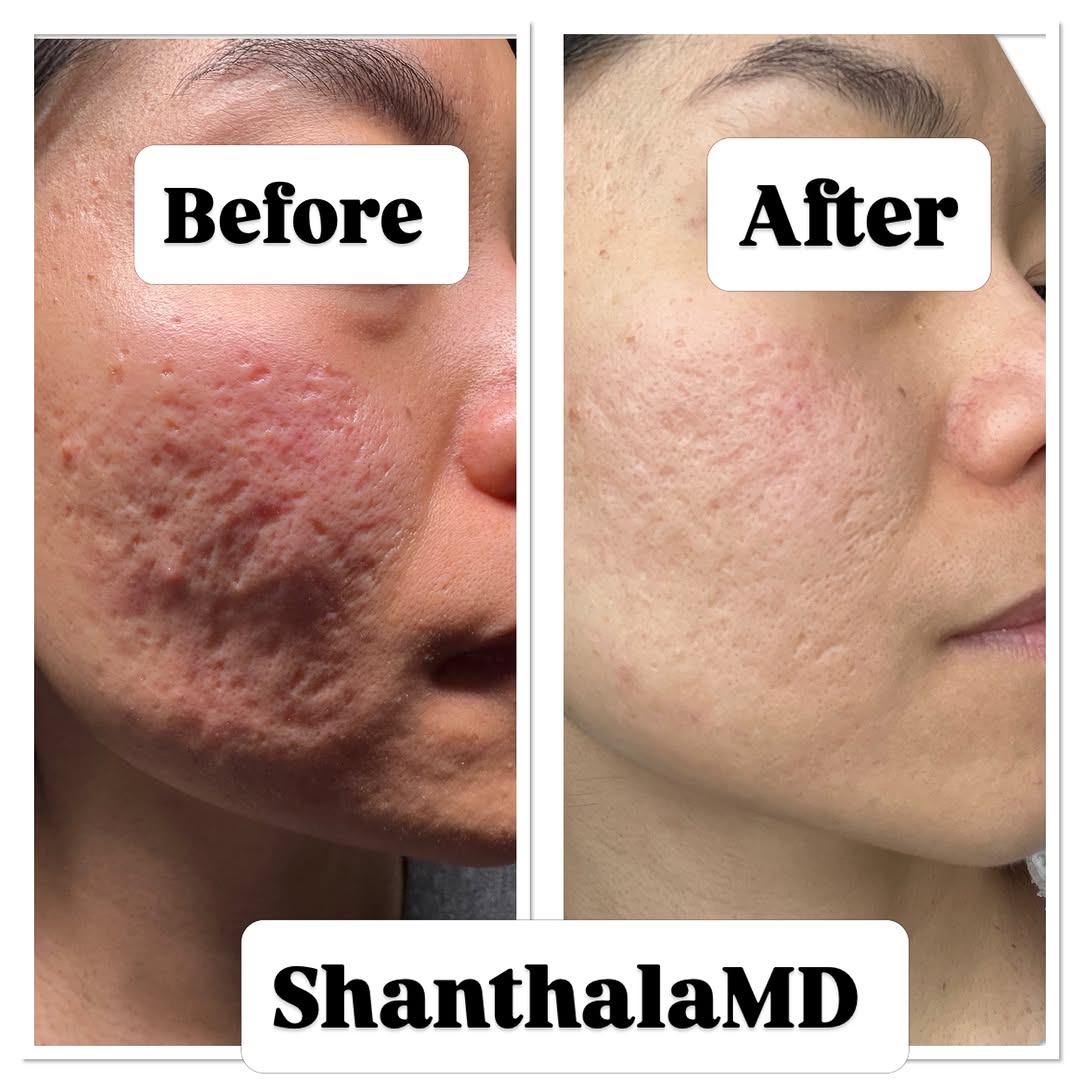
For significant acne scarring, Dr. Shanthala may utilize an aggressive same-day multimodal approach, combining various treatments to achieve optimal results.
Are acne scar treatments typically a single session or a series?
Dr. Shanthala is committed to a series of treatments for significant acne scars, as visible improvement often requires multiple combination sessions over time.
How long does it take to see final results from acne scar treatments?
The final results of acne scar treatments are not immediate; significant improvement takes time and often requires a series of combination treatments.
Does Dr. Shanthala have specific considerations for treating skin of color?
Yes, for patients with skin of color, careful treatment planning and post-care are especially important to ensure safety and optimal outcomes.
What is discussed during a consultation with Dr. Shanthala?
During a consultation, Dr. Shanthala discusses individualized treatment options, potential risks, expected downtime, and realistic outcomes to ensure patients are fully informed. Specific questions regarding acne scars or their treatment are also thoroughly addressed.
What is the recovery time for UltraClear Laser Coring?
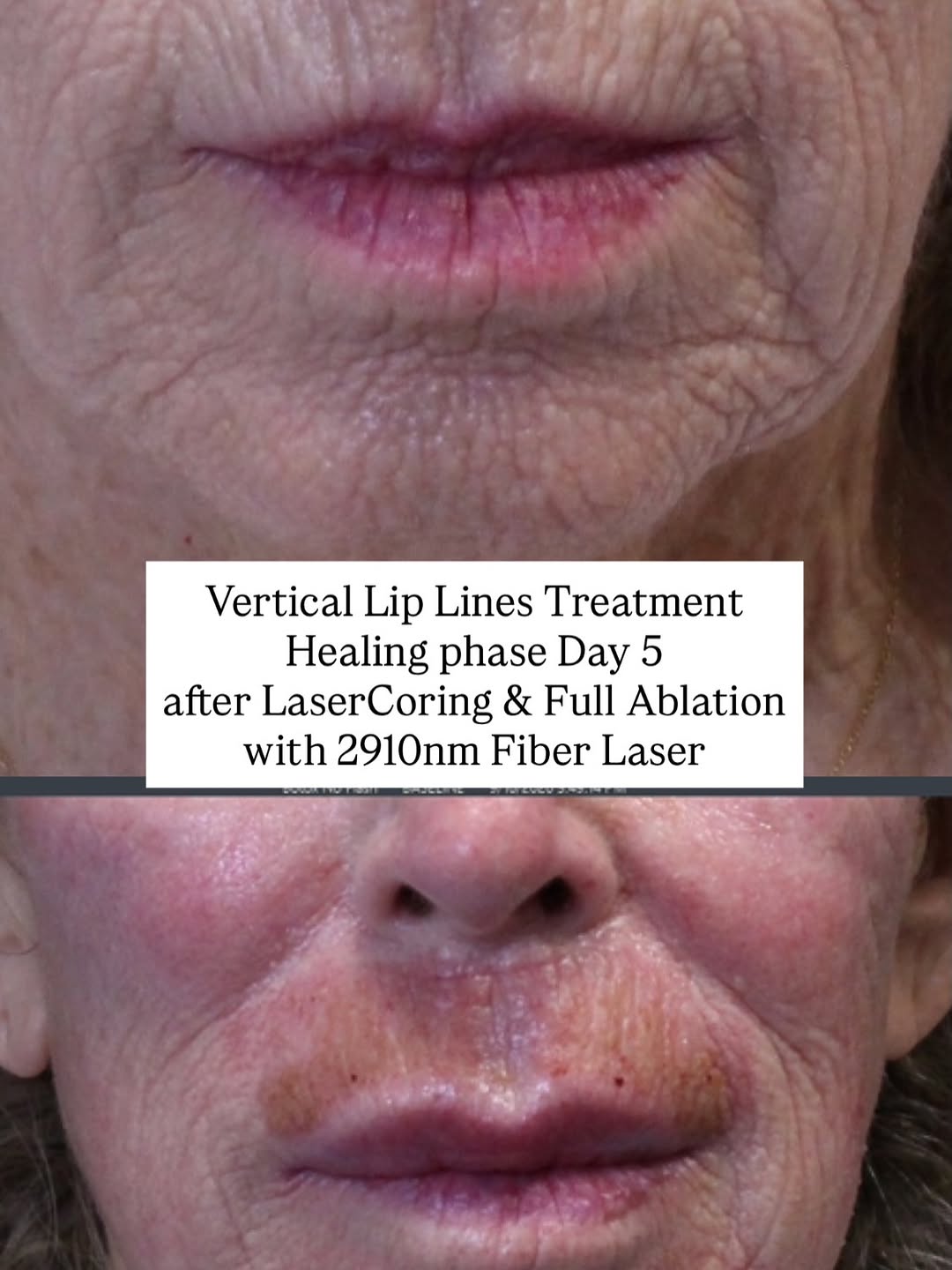
UltraClear Laser Coring offers a fast recovery, with some patients able to return to work as early as four days after treatment.
What are the long-term benefits of UltraClear Laser Coring?
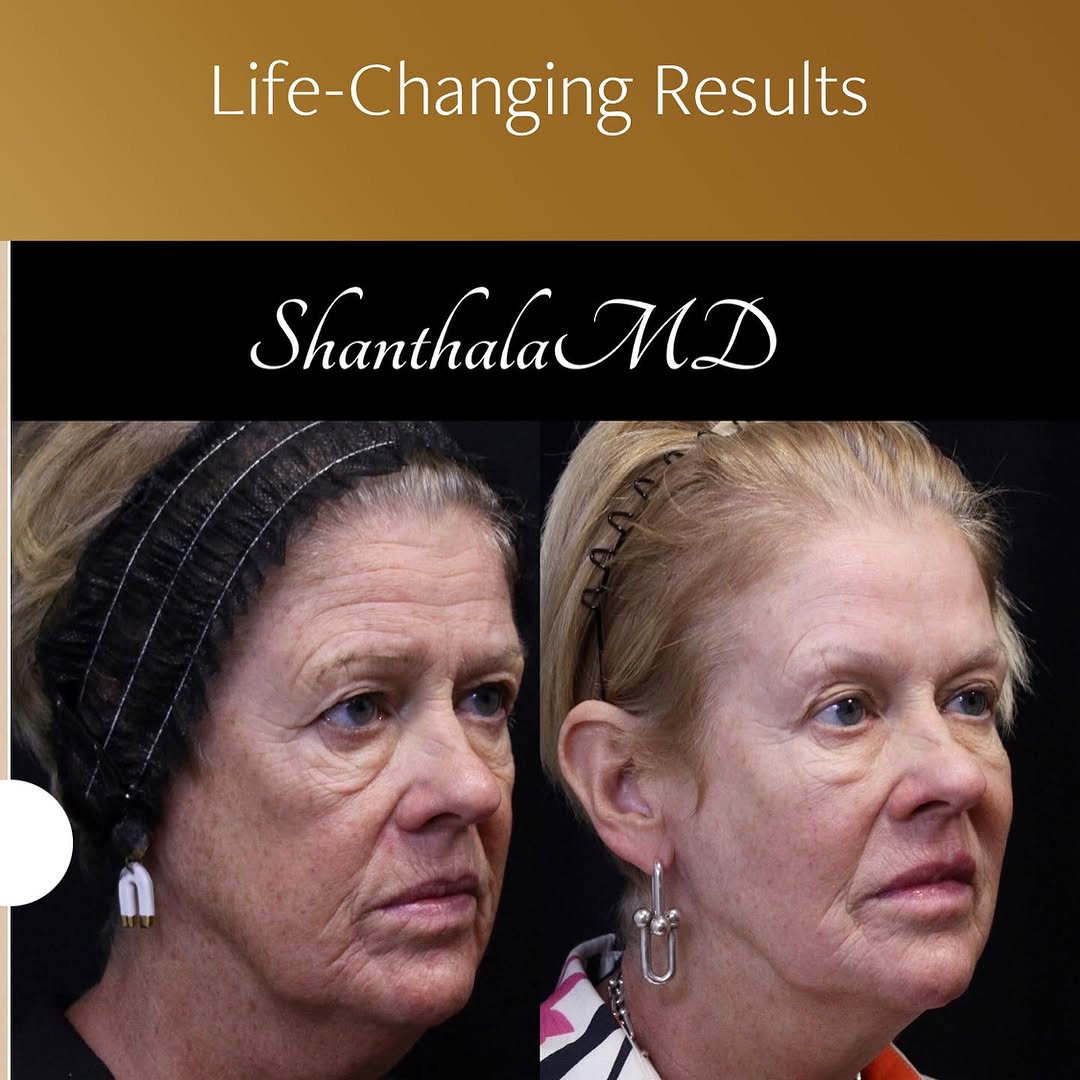
UltraClear Laser Coring provides long-term benefits, with patients often seeing continued improvement in skin quality even a year after treatment. Patients often find their skin looks even better one year after UltraClear Laser (Laser-Coring) treatment than it did before, and even better at 12 months than at 3 months post-treatment.
Are UltraClear Laser and Laser Coring treatments invasive?
No, UltraClear Laser and Laser Coring treatments are non-surgical and performed without incisions or anesthesia, leading to shorter recovery times.
What are some potential long-term complications of surgical facial rejuvenation?
Dr. Shanthala notes that long-term complications of surgery, such as scarring, poor healing, asymmetry, nerve damage, prolonged downtime, swelling, the need for multiple revision surgeries, high costs, and ongoing maintenance, are often not fully discussed with patients.
Does a surgical facelift improve skin quality or texture?
Dr. Shanthala states that while surgery lifts facial structures, it does not improve skin quality, texture, or long-term collagen health. Lasers, however, excel at improving skin quality.
Can UltraClear Laser and Laser Coring be an alternative to CO₂ laser treatment?
Yes, for suitable patients, UltraClear Laser and Laser Coring may be considered as an effective alternative to CO₂ laser treatment, often with fewer side effects.
What are the unique capabilities of a surgical facelift?
Surgical facelifts are capable of accessing, releasing, and repositioning deeper facial tissues, a capability that non-surgical treatments cannot reproduce.
Are there limits to non-surgical correction of aging skin?
Yes, due to anatomical limits, an aging, redundant skin envelope cannot be completely corrected without surgery.
Does a facelift stop the aging process?
No, a facelift does not stop the aging process, nor does any other treatment.
How quickly can visible improvements be seen after treatment?
Patients can often observe visible refinement from treatments in under two weeks, with comprehensive improvements continuing over time.
What type of aging does Dr. Shanthala's treatments address?
Her treatments primarily address extrinsic aging, which is the cumulative impact of sun exposure and environmental factors, often yielding more significant improvements than addressing intrinsic aging alone.
What is The Boston Laser-Coring Lift™?
The Boston Laser-Coring Lift™ is a customized, physician-performed protocol designed by Dr. Shanthala to address skin at multiple depths with precision and restraint, ensuring a holistic approach rather than treating isolated parts.
Can a single treatment provide significant results?
For carefully selected patients, even a single treatment can lead to a meaningful shift, resulting in smoother texture, improved firmness, softening of fine lines, and a more even, refined appearance.
What is the follow-up process for UltraClear Laser (Laser-Coring) treatment?
A 12-month follow-up is part of the UltraClear Laser (Laser-Coring) treatment process, and a second gentle maintenance session can be performed one year after the initial treatment.
Is there an optimal time to start skin treatments for aging?
Dr. Shanthala advises that delaying skin treatment can make it harder to reverse the effects of aging, suggesting that timely intervention is beneficial.
How does Dr. Shanthala view severe atrophic scars?
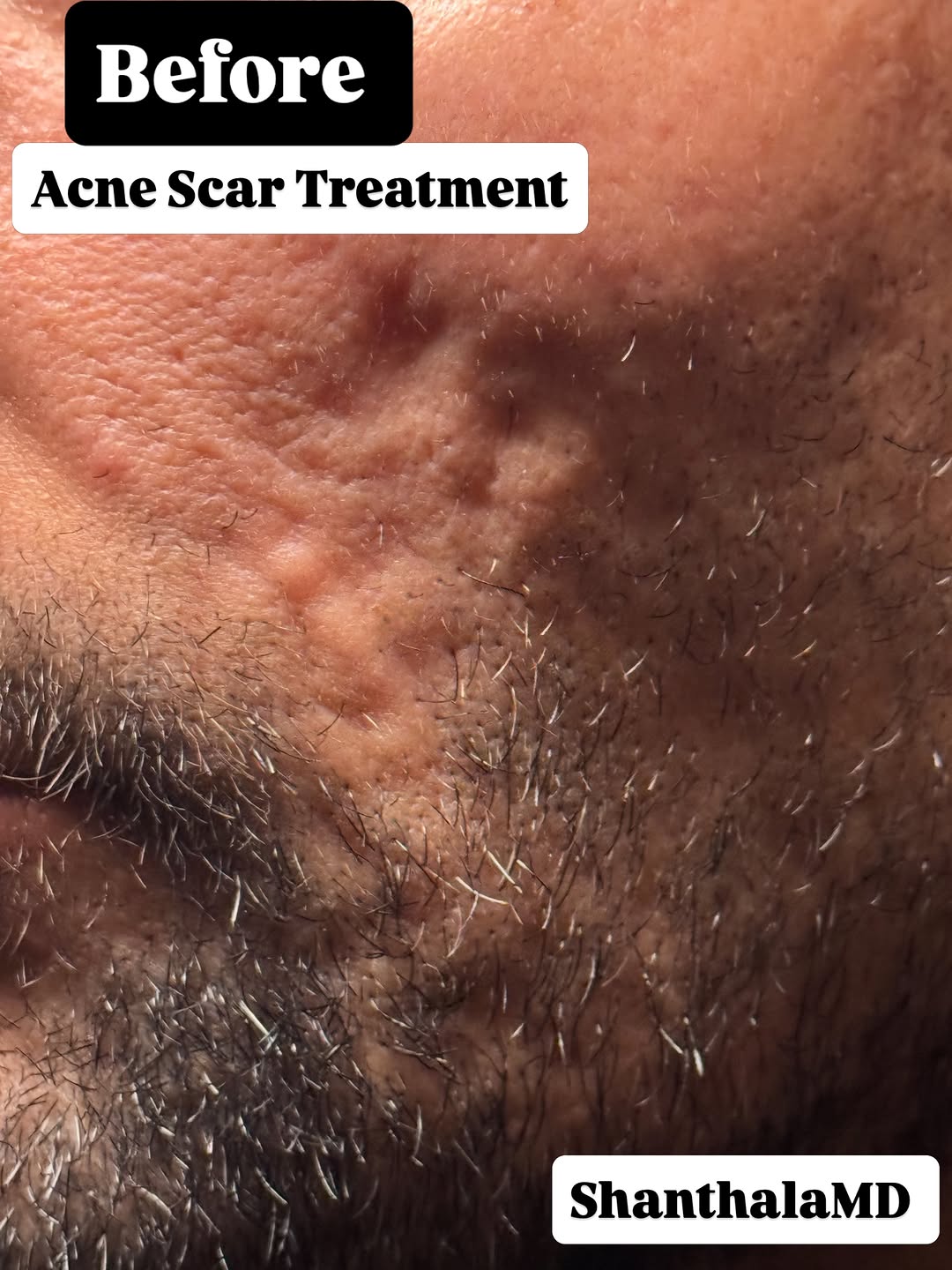
Dr. Shanthala views severe atrophic scars as architectural problems, not merely surface or textural issues. She explains that fibrous bands tether the dermis to deeper structures, creating fixed depressions, and volume loss further accentuates shadowing and contour irregularity.
What is Dr. Shanthala's multimodal approach to severe atrophic acne scarring?
For severe atrophic acne scarring, Dr. Shanthala employs a multimodal therapy over several sessions, often combining Subcision, PRP, Fillers, and LaserCoring in a single visit. This approach addresses the scar at multiple structural levels by physically releasing adhesions (Subcision), restoring lost volume and preventing re-adhesion (Hyaluronic acid filler), supporting tissue regeneration (PRP), and excising scarred skin to recruit normal collagen and elastin (LaserCoring).