NavMDs
Dr. Ross Kopelman, DO - Hair Restoration Surgeon in New York, New York

Dr. Ross Kopelman, DO

Hair Restoration Surgeon

New York, New York
4.5(154 ratings)

Consultation $350

In Dr. Ross Kopelman's own words

How Dr. Ross Kopelman describes their own approach, from their Instagram posts. Each statement links to the original.

Approach

  • When I perform a hair transplant, I believe every single detail matters
  • For me, the goal is never just to move hair it is to recreate how nature intended it to grow, with softness in the hairline, proper irregularity, and density placed exactly where it belongs
  • Dr. Ross Kopelman believes the unshaven hair transplant is superior to any other types of hair transplants available.

Specialization

  • Dr. Ross Kopelman identifies as a hair transplant surgeon and a hair loss expert who guides patients on appropriate medications.
  • Dr. Ross Kopelman implies that not many people can perform unshaven hair transplants, suggesting a specialized skill.

Technique

  • I rely on high-power magnification to carefully inspect every graft, control the angle and direction of placement, and create a result that looks natural from every perspective
  • With the unshaven FUE approach, grafts can be carefully extracted from the donor area and placed into the thinning areas without shaving the head

Technology

  • Dr. Ross Kopelman considers high power magnification to be critically important for successful hair restoration surgery.

Training & credentials

  • I spend a lot of time educating people about hair loss and hair transplants

Consultation

  • The doctor typically outlines a hair loss routine for patients.

Safety

  • Dr. Ross Kopelman advises against going to Turkey for hair restoration procedures.

Results

  • Whether I’m helping a patient feel more confident about their hair or stepping onto the court for a match, confidence can make a real difference

Statements are quoted or closely paraphrased from Dr. Ross Kopelman's own public posts and are their claims, not NavMDs' medical advice. Doctors can correct or remove any item via their claimed profile or support [at] navmds.com.

About

Dr. Ross Kopelman, DO, is a Hair Restoration Surgeon practicing in New York, New York, and Palm Beach. He is affiliated with The Root MD and Unshaven Hair Clinic. Dr. Kopelman emphasizes meticulous precision in hair transplantation, relying on high-power magnification to carefully inspect every graft, control placement angle and direction, and create natural-looking results. His goal is to recreate hair growth as nature intended, focusing on soft hairlines, proper irregularity, and precise density, rather than simply moving hair. He believes the best outcomes arise from patience, surgical precision, and an obsessive focus on the smallest details. Dr. Kopelman prioritizes transparency, patient education, and setting realistic expectations, underscoring the physician's responsibility to ensure patients make informed, not impulsive, decisions. He dedicates significant time to educating people about hair loss and hair transplants, always happy to guide individuals with questions, even encouraging them to ask if they encounter him outside of the practice. He states that hair loss treatment doesn't have to feel complicated.

Connect with Dr. Ross Kopelman on Social Media

Specialties

  • Hair Restoration Surgeon

Procedures & Services

Select a service to schedule an appointment · each is approximately 60 minutes

Questions, Answers, and Information Directly from Dr. Ross Kopelman

Sourced directly from Dr. Ross Kopelman's social posts and replies.

Why is early intervention important for hair loss?
Hair loss is a progressive condition, and earlier treatment consistently leads to better outcomes and more treatment options. It's always easier to preserve existing hair than to rebuild lost hair, as follicles miniaturized for too long become harder to revive. Acting early provides better long-term control and improves the chances of preserving your hair.
What is the first step in addressing hair loss?
The first step is to consult a hair transplant surgeon, dermatologist, or hair loss specialist who can assess your condition and recommend the right treatment plan.
What medical therapies are used for hair loss and how do they work?
DHT blockers like finasteride or dutasteride help slow hair follicle miniaturization. Minoxidil stimulates hair growth, improves thickness, and prolongs the hair cycle's growth phase. Both can play an important role in managing hair loss when prescribed appropriately. Patients should not panic about starting these medications, as the right treatment plan can protect and improve hair over time.
What is Dr. Kopelman's recommended hair loss routine?
Dr. Kopelman typically outlines a routine focused on protecting against DHT, supporting hair growth, and taking care of the scalp, with consistency being key. Primary tools include Finasteride and Minoxidil. He also recommends a good pre-shower oil, shampoo, and conditioner for a healthier scalp. The key is understanding the function of each step rather than indiscriminately using products.
What should patients consider when choosing a hair transplant clinic?
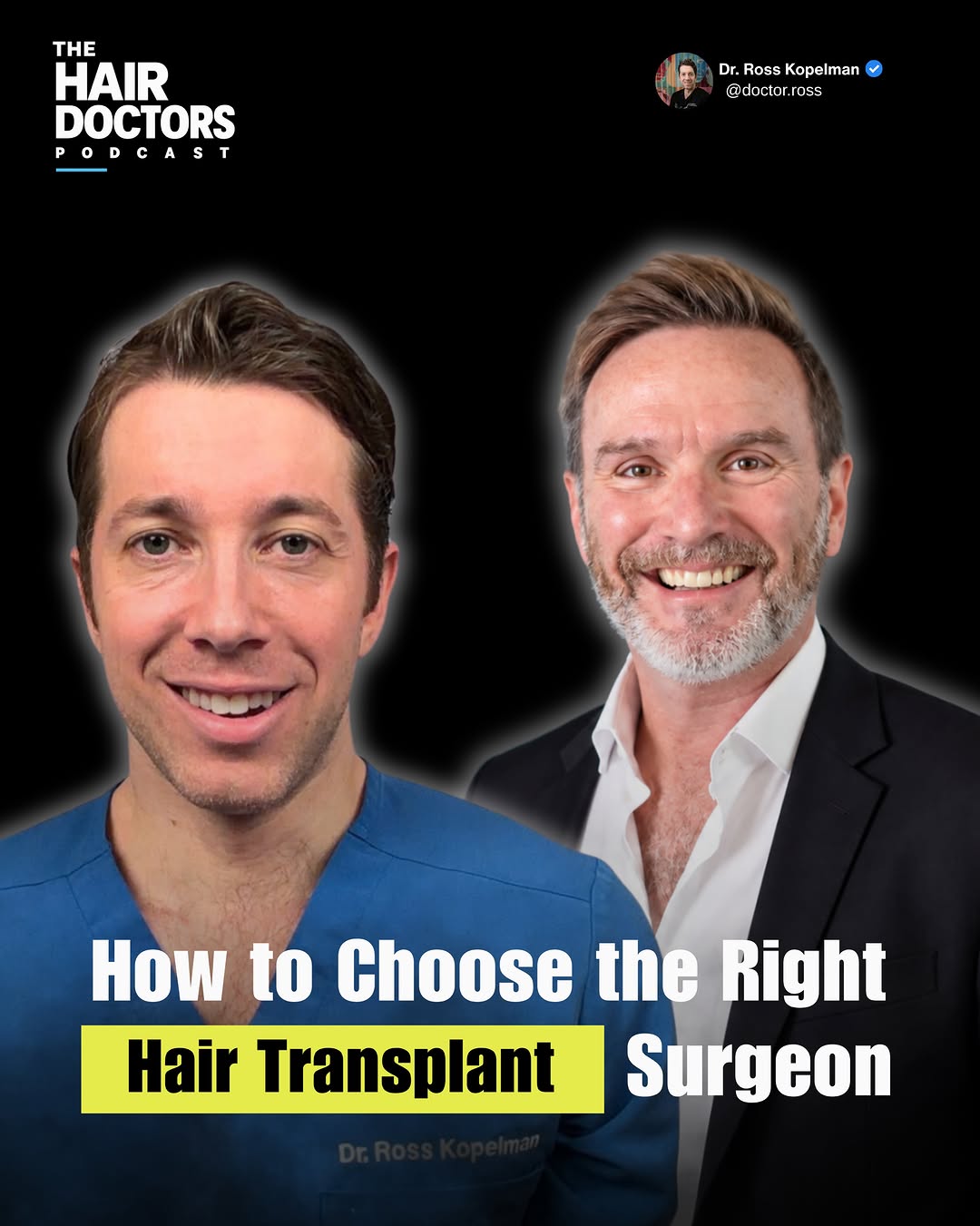
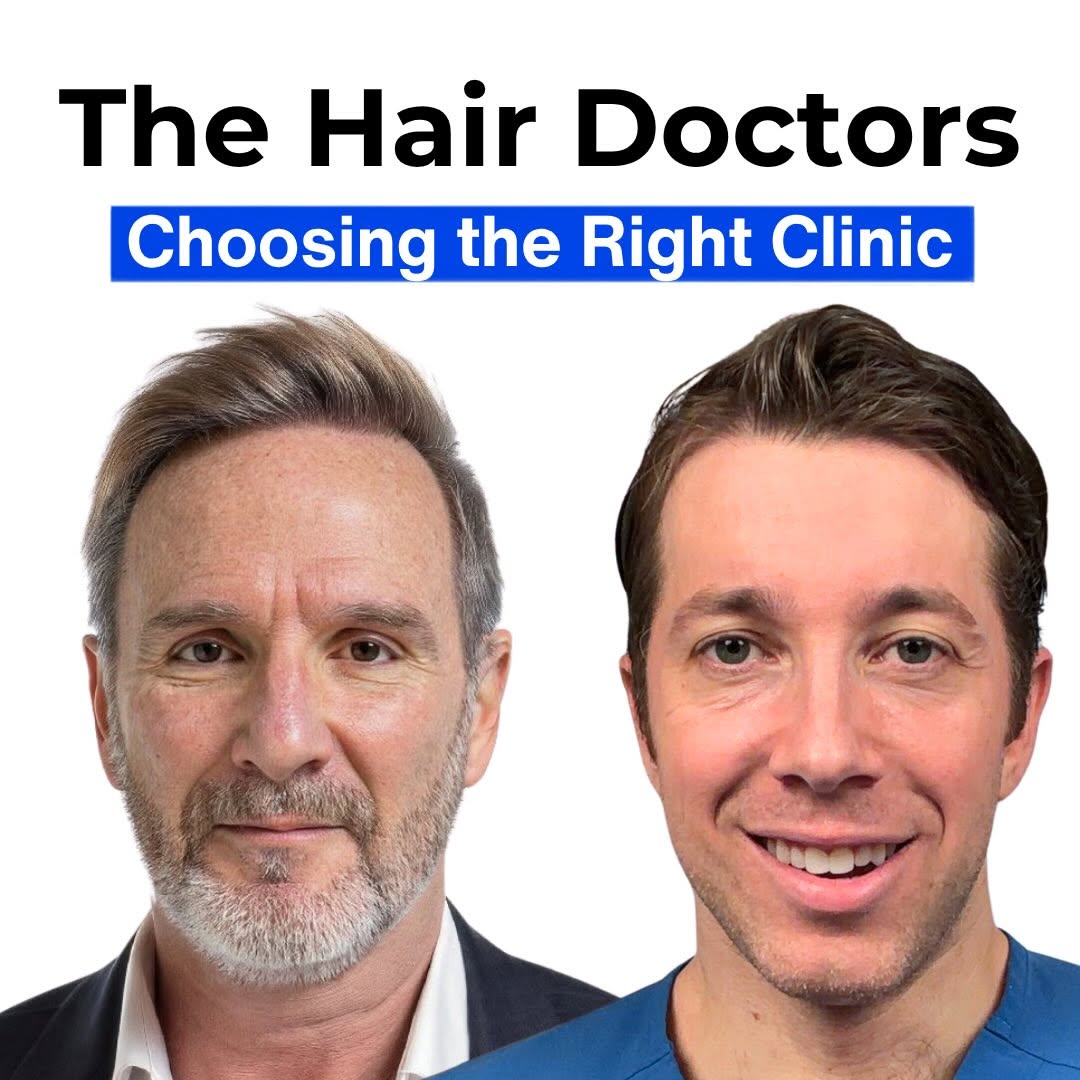
Choosing a hair transplant clinic involves more than just before and after photos. Patients need to understand their options, know what questions to ask, and ensure surgery is the right step for them. Medical treatment should often be considered before surgery, and patients should avoid being rushed into a procedure.
What is involved in an eyebrow hair transplant?
Eyebrow hair transplant is detailed work where every single graft must be carefully placed to match the natural angle, direction, and shape of the eyebrow. This meticulous approach ensures the final result looks natural.
What is the difference between FUE and FUT hair transplants?
FUE (Follicular Unit Extraction) involves removing individual hair follicles one at a time from the back of the scalp, and is an option for patients who prefer to avoid a linear scar. FUT (Follicular Unit Transplantation) involves removing a strip of follicles and requires suturing. FUT can be a great option when a larger number of follicles are needed. The right choice between FUE and FUT depends on the individual patient, their hair, and their specific needs.
What is an unshaven FUE hair transplant and who is it for?
Dr. Kopelman performs unshaven FUE hair transplants, believing patients shouldn't have to shave their head for hair restoration. This approach is suitable for professionals who want to keep their hair intact. Grafts are carefully extracted and placed without shaving, allowing for better preservation of the donor supply, more precise graft placement based on existing hair, and a more discreet recovery with less disruption to daily and professional life.

What patients ask Dr. Ross Kopelman

Questions people asked under Dr. Ross Kopelman's Instagram posts, 1 answered by the doctor.

  • I've read about finasteride syndrome and it was terrifying. What is your take on it?

    asked on Instagram ↗

Questions are from public comments, shown without the commenter's name. Answers are Dr. Ross Kopelman's own statements from their videos and replies, not NavMDs' medical advice.

From Dr. Ross Kopelman's Instagram

@doctor.ross →

Recent photos posted by @doctor.ross, Dr. Ross Kopelman's own Instagram account. Each image opens the original post on Instagram.
Images © Dr. Ross Kopelman / @doctor.ross, shown here with a link to the original post. Procedure labels are inferred from the post's caption and hashtags. If you are the account owner and want an image removed, contact support [at] navmds.com.

Patient Experience

Dr. Ross Kopelman Review Summary

4.67
Dr. Kopelman has excellent ratings! He maintains a 5.0 rating based on 3 reviews, and his associated websites, drkopelman.com and kopelmanhair.com, both hold strong 4.5/5 ratings.

Ratings from Other Platforms

drkopelman.com

4.5 out of 5

Based on 202 reviews

View on drkopelman.com

kopelmanhair.com

4.5 out of 5

Based on 106 reviews

View on kopelmanhair.com
Dr. Ross Kopelman, DO - Hair Restoration Surgeon in New York, New York

Main Office

1112 Park Ave., #1A, New York, New York

Book a Service Consultation

Consultation fee: $350

Each service is approximately 60 minutes.

Insurance Information

Please contact Dr. Ross Kopelman's office directly for information about accepted insurance plans.

Help us improve this profile

Do you know which insurance plans Dr. Ross Kopelman accepts? Share this information to help other patients.

Location & Contact Information

Main Office

1112 Park Ave., #1A

New York, New York

Office Information

Where does Dr. Ross Kopelman practice?

Doctor's Office

Main Office (Primary)

1112 Park Ave., #1A, New York, New York

(3 reviews)

Hospital Affiliations

Hospital affiliations unknown

Do you know which hospitals Dr. Ross Kopelman is affiliated with? This information helps patients understand where they might receive care.

Education & Experience

Education

Mba, Cornell University, 2020 - 2020
Touro College Of Osteopathic Medicine, Class Of 2018

Frequently Asked Questions

Can you make an appointment with Dr. Ross Kopelman online?
While the provided information doesn't explicitly state online booking, it's recommended to visit drkopelman.com or call 212-831-8333 for appointment scheduling.
Does Dr. Ross Kopelman offer telehealth?
Yes, Dr. Kopelman offers virtual appointments.
What do patients have to say about Dr. Ross Kopelman?
Patients rave about Dr. Kopelman's expertise and results. They express high satisfaction with their outcomes, highlighting significant improvements and overall happiness with their hair restoration journey.
What areas of care does Dr. Ross Kopelman cater to?
Dr. Kopelman specializes in hair restoration, offering a range of treatments for hair thinning and loss. This includes both surgical options like FUE hair transplants and non-invasive approaches for revitalization without surgery. Dr. Kopelman emphasizes meticulous precision in hair transplantation, relying on high-power magnification to carefully inspect every graft, control placement angle and direction, and create natural-looking results. His goal is to recreate hair growth as nature intended, focusing on soft hairlines, proper irregularity, and precise density, rather than simply moving hair, believing the best outcomes arise from patience, surgical precision, and an obsessive focus on the smallest details. Furthermore, he prioritizes transparency, patient education, and setting realistic expectations, underscoring the physician's responsibility to ensure patients make informed, not impulsive, decisions, and that hair loss treatment doesn't have to feel complicated.