
NavMDs
Dr. Kiran Sajja, MD - Board Certified Ophthalmologist in Alpharetta, Georgia

Dr. Kiran Sajja, MD

Board Certified Ophthalmologist

Alpharetta, Georgia
● Taking New Patients
NPI: 1013129725· License: 71281 (GA) verify
Medical school: Clvlnd Clinic Lerner College Of Med Of Case Wstn Rsv University · Graduated 2004
Industry payments (2024): $524 across 17 payments (what this means)
4.91(105 ratings)

✓ Free consultation

About

Dr. Kiran Sajja is a Board Certified Ophthalmologist practicing in Alpharetta, Georgia. He specializes in ophthalmology, with a focus on oculoplastic surgery for the eyelids, face, orbit, and lacrimal system. Dr. Sajja also performs Cataract Surgery, LASIK, PRK, Glaucoma Treatment, and Cornea Treatment. For cosmetic care, he offers Botox, Dysport, Daxxify, and RHA fillers. Dr. Sajja emphasizes that understanding the actual cause of vision changes is the initial step toward finding appropriate treatment. He believes comprehensive eye exams are important because they evaluate each eye individually, helping to monitor vision and detect changes early before they interfere with daily life. He advises patients not to wait until vision problems become obvious, noting that small changes often happen gradually and can be easy to overlook. The Milan Eye Center is dedicated to helping protect every part of a patient's vision.

Connect with Dr. Kiran Sajja on Social Media

Specialties

  • Comprehensive Ophthalmology

Procedures & Services

Select a service to schedule an appointment · each is approximately 60 minutes

Questions, Answers, and Information Directly from Dr. Kiran Sajja

Sourced directly from Dr. Kiran Sajja's social posts and replies.

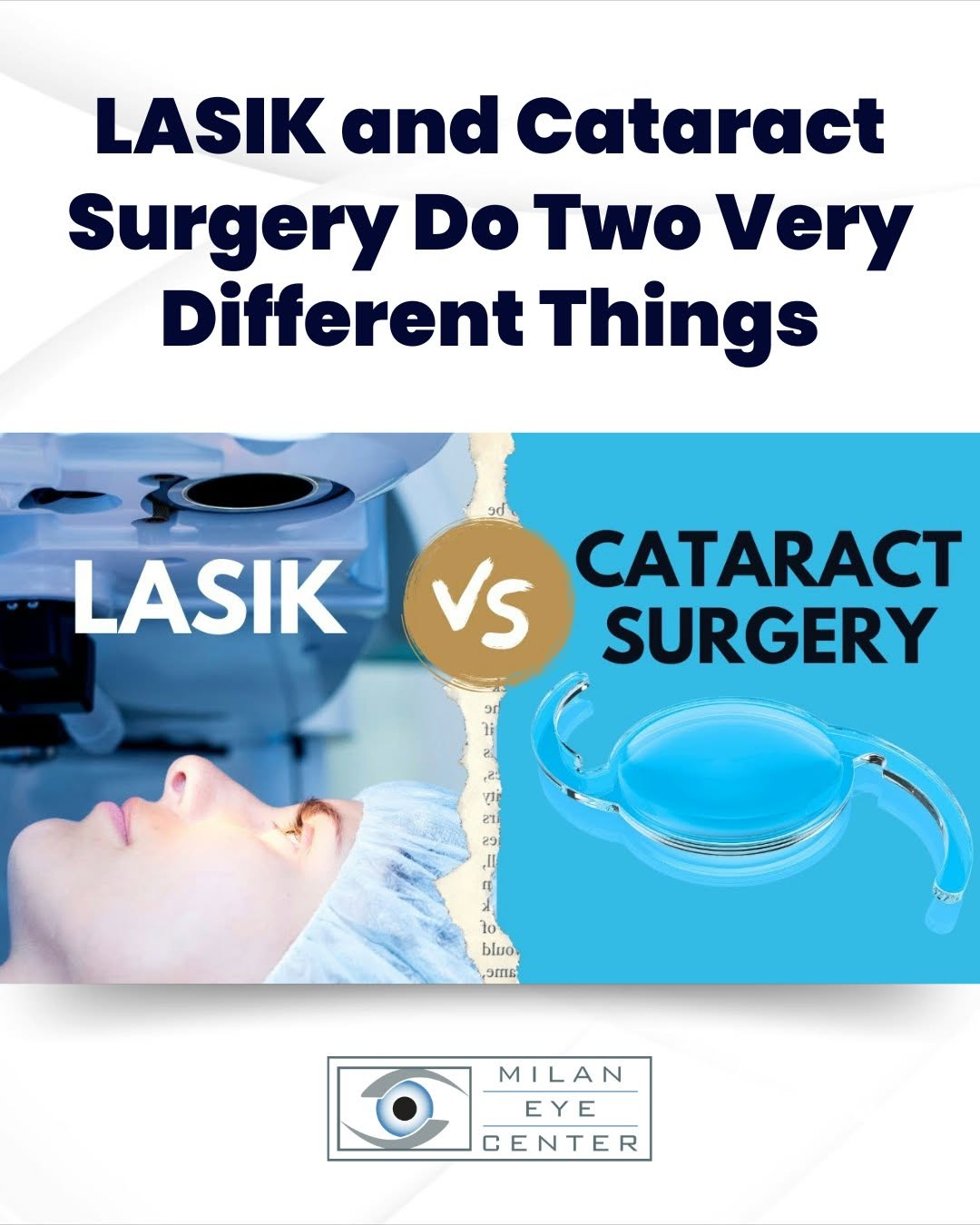
What is the difference between LASIK and cataract surgery?
Both LASIK and cataract surgery aim to improve vision, but they treat completely different parts of the eye. LASIK reshapes the cornea to change how light is focused. Cataract surgery removes the eye's cloudy natural lens and replaces it with an artificial intraocular lens. LASIK does not remove cataracts, and cataract surgery is not simply 'LASIK for older adults.'
How do eyes adjust to darkness, and when should I be concerned about difficulty adjusting?
Your eyes need time to adapt to lower levels of light. This involves your pupils widening and specialized cells in your retina becoming more sensitive, gradually helping you see better in darkness. If you've noticed that adjusting to darkness has become significantly harder, especially while driving at night, you should mention it at your next eye appointment.
What is the cornea and why is it important for vision?
The cornea is the clear, dome-shaped surface at the front of your eye. It's one of the most important parts, helping to protect your eye and playing a major role in focusing light for clear vision by bending incoming light toward the retina. It also acts as a protective barrier against dust, germs, and other irritants. For light to focus correctly, the cornea has to stay clear and properly shaped. Even small changes or problems with the cornea can affect vision sharpness, clarity, comfort, and light sensitivity.
What causes glare or halos around lights, and when should I seek an eye exam?
Occasional glare around lights is common. However, frequent halos or glowing rings around bright lights at night can be related to changes in the eye, potentially caused by cataracts, dry eye, or other vision conditions. If nighttime driving suddenly feels more difficult than it used to, it's advisable to have your eyes checked.
What current promotions or discounts does Milan Eye Center offer?
Milan Eye Center offers several promotions: a $1,000 discount on LASIK procedures (booking required between August 1st and August 31st), a 20% discount on a skincare bundle including Obagi RX 0.025% Tretinoin, Obagi RX 15% or 20% Vitamin C, and Obagi Hydrodrops Eye. Patients can also save $200 when purchasing two syringes of filler, or $350 when purchasing three syringes, with purchased syringes redeemable within one year. All listed offers are valid only between August 1st and August 31st.
Why are regular and comprehensive eye exams important, even for small vision changes?
Small vision changes often happen gradually and are easy to overlook, especially because your brain naturally blends vision from both eyes, making it easy to miss when one eye starts changing. Regular and comprehensive eye exams are very important as they help monitor your vision, evaluate each eye individually, and detect changes early before they start interfering with everyday life. Patients should not wait until vision problems become obvious.
How does hydration affect eye health, and when should I seek help for dry eyes?
When your body doesn't have enough water, your eyes can become dry, irritated, and uncomfortable. Staying hydrated helps support healthy tear production and keeps your eyes feeling their best—especially during Georgia's hot summer months. If dry, scratchy eyes are becoming a daily problem, Milan Eye Center is here to help.
What are the signs and symptoms of developing cataracts?
Many people think cataracts only cause blurry vision, but there are other signs. As cataracts develop, you may notice increased glare from headlights, difficulty driving at night, colors appearing dull or yellowed, or needing brighter light to read. These changes often happen gradually, making them easy to overlook. If your vision isn't as sharp or vibrant as it used to be, an eye exam can help determine the cause.
What are important eye safety tips, especially regarding fireworks?
To protect your vision, it's recommended to admire fireworks from a safe distance and leave the lighting of fireworks to professionals.
What should I know about glaucoma screenings and diagnosis?
It's important to know that some people can develop glaucoma despite having normal eye pressure, while others may have elevated eye pressure without experiencing vision loss. Therefore, glaucoma screenings involve more than a single test. Comprehensive eye exams are beneficial for evaluating the overall health of the optic nerve and detecting early warning signs of eye conditions, as early detection is crucial for protecting your vision.

From Dr. Kiran Sajja's Instagram

@milaneyecenter

Recent photos posted by @milaneyecenter, Dr. Kiran Sajja's own Instagram account. Each image opens the original post on Instagram.

Images © Dr. Kiran Sajja / @milaneyecenter, shown here with a link to the original post. If you are the account owner and want an image removed, contact [email protected].

Patient Experience

Dr. Kiran Sajja Review Summary

4.88
Dr. Sajja has exceptionally high ratings across various platforms. He boasts a perfect 5.0 from 4 reviews, a 5/5 on health.usnews.com, a 4.7/5 on healthgrades.com, and an impressive 4.9/5 on Google reviews. Overall, patients are extremely satisfied with his services.

Ratings from Other Platforms

health.usnews.com

5 out of 5

Based on 68 reviews

View on health.usnews.com

healthgrades.com

4.7 out of 5

Based on 21 reviews

View on healthgrades.com

Google Reviews

4.9 out of 5

Based on 226 reviews

View on Google Reviews
Dr. Kiran Sajja, MD - Board Certified Ophthalmologist in Alpharetta, Georgia

Main Office

2555 Westside Pkwy Suite 300, Alpharetta, Georgia

(678) 381-2020

Book a Service Consultation

Free consultation

Each service is approximately 60 minutes.

Industry Payments

Federal law (the Physician Payments Sunshine Act) requires drug and medical-device companies to report anything of value they give to a physician — consulting and speaking fees, research funding, travel, royalties, and even meals. Medicare publishes all of it in a public database called Open Payments. We show it here so you don't have to go looking for it.

Total received (2024)

$524

Payments

17

Compared to peers

Modest

Dr. Kiran Sajja received $524 across 17 payments in 2024. That is higher than about 56% of the physicians here who received any industry payment. Most of it was categorised as food and beverage, and the largest single payer was Amgen Inc..

What this means for your care

  • A disclosed payment is a business relationship, not evidence of wrongdoing, and it says nothing on its own about the quality of your care.
  • Most payments are small. Across the physicians listed on NavMDs, the single most common category is food and beverage at industry-sponsored talks.
  • Larger consulting, speaking or royalty payments mean an ongoing financial relationship with a company whose products your doctor may use or recommend. That is worth knowing about, and it is reasonable to ask about.
  • A fair question to ask: “Do you have a financial relationship with the maker of the implant, filler or device you're recommending — and what alternatives did you consider?”

Source: CMS Open Payments, the federal database created by the Sunshine Act. View the full record on CMS Open Payments ↗

Patient Awards

Top Doctor
Top Doctor

Insurance Information

Please contact Dr. Kiran Sajja's office directly for information about accepted insurance plans.

Phone: (678) 381-2020

Help us improve this profile

Do you know which insurance plans Dr. Kiran Sajja accepts? Share this information to help other patients.

Location & Contact Information

Main Office

2555 Westside Pkwy Suite 300

Alpharetta, Georgia 30004

Office Information

Phone: (678) 381-2020

Where does Dr. Kiran Sajja practice?

Doctor's Office

Main Office (Primary)

2555 Westside Pkwy Suite 300, Alpharetta, Georgia 30004

(4 reviews)

Hospital Affiliations

orbit and lacrimal system

Help improve our data. Confirm if Dr. Kiran Sajja is affiliated with orbit and lacrimal system.

Education & Experience

Certifications & Licenses

Board Certified Ophthalmologist
Board Certified Oculoplastic Surgeon

Frequently Asked Questions

Can you make an appointment with Dr. Kiran Sajja online?
While the provided information doesn't confirm online booking, some descriptions mention booking appointments, suggesting it might be possible. It's best to contact the office directly at (678) 381-2020 to inquire about online booking options.
Does Dr. Kiran Sajja offer telehealth?
The provided information doesn't mention telehealth services. Contacting the office directly is recommended for the most accurate information.
What do patients have to say about Dr. Kiran Sajja?
Patient reviews range from extremely positive to highly negative. While some patients rave about improvements in vision and appearance, and describe their experience as "amazing", one review highlights a negative experience with office personnel.
What areas of care does Dr. Kiran Sajja cater to?
Dr. Sajja's areas of care focus on ophthalmology, particularly oculoplastic surgery. This includes medical and surgical treatment of the eyelids, face, orbit (the bony socket surrounding the eye), and lacrimal system (tear ducts). He also offers cosmetic procedures such as Botox, Dysport, Daxxify, and RHA fillers. The Milan Eye Center is dedicated to helping protect every part of a patient's vision. Dr. Sajja emphasizes that understanding the actual cause of changes in your vision is the initial step towards finding the appropriate treatment.