
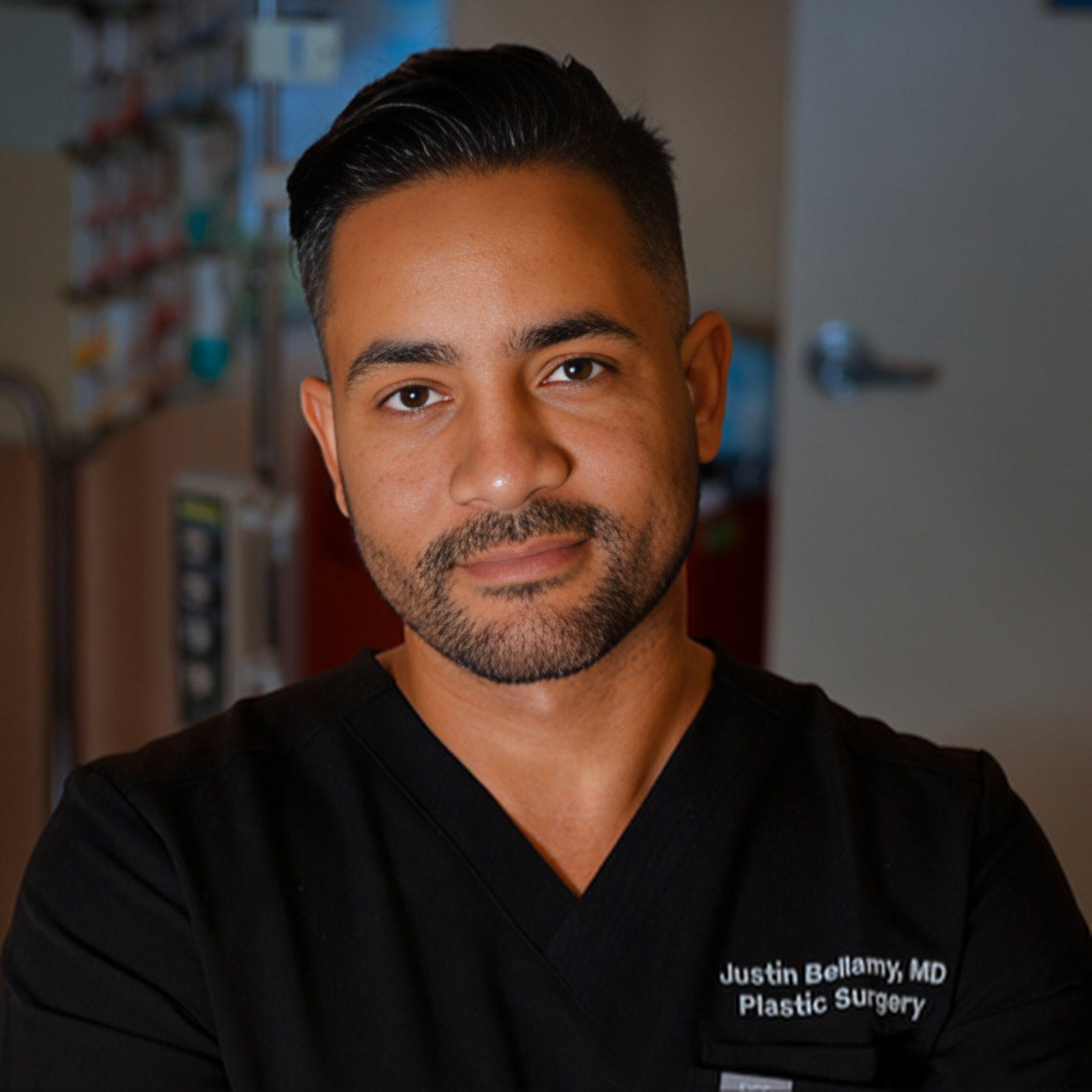
Dr. Justin L. Bellamy, MD
Board Certified Plastic Surgeon
6+ years of experience · self-reported
✓ Free consultation
In Dr. Justin L. Bellamy's own words
How Dr. Justin L. Bellamy describes their own approach, from their TikTok posts. Each statement links to the original.
Specialization
Consultation
- We'll have that conversation as to what your top three goals are for your noseTikTok ↗
Recovery guidance
Results
- Achieving good results is important to the practice.TikTok ↗
Statements are quoted or closely paraphrased from Dr. Justin L. Bellamy's own public posts and are their claims, not NavMDs' medical advice. Doctors can correct or remove any item via their claimed profile or support [at] navmds.com.
About
Connect with Dr. Justin L. Bellamy on Social Media
Specialties
- Board Certified Plastic Surgeon
Procedures & Services
Select a service to schedule an appointment · each is approximately 60 minutes
Procedure details
Everything on this page about each procedure Dr. Justin L. Bellamy offers: pricing in context, what they've said about it, related videos and photos, and what patients ask.
Questions, Answers, and Information Directly from Dr. Justin L. Bellamy
Sourced directly from Dr. Justin L. Bellamy's social posts and replies.
What patients ask Dr. Justin L. Bellamy
Questions people asked under Dr. Justin L. Bellamy's TikTok videos, 4 answered by the doctor.
What is liquid rhinoplasty, how long do its results last, and what are its limitations compared to surgical rhinoplasty?
Why are surgical drains necessary for procedures like liposuction, and how long do they typically stay in?
What are the common causes of infection in silicone nasal implants, and what are the warning signs patients should look for?
What are the ideal characteristics of a candidate for surgical rhinoplasty?
What is a direct neck lift, and how does it differ from other neck rejuvenation procedures like a traditional facelift?
asked on TikTok ↗· not yet answered
What are the advantages and disadvantages of choosing local anesthesia over general anesthesia for surgery?
asked on TikTok ↗· not yet answered
What factors contribute to a quick healing process after surgery, and what can patients do to promote faster recovery?
asked on TikTok ↗· not yet answered
What are the potential risks and complications associated with rhinoplasty?
asked on TikTok ↗· not yet answered
What are the differences between silicone and saline breast implants, and how do patients choose the right type and size?
asked on TikTok ↗· not yet answered
What are the typical costs associated with rhinoplasty procedures?
asked on TikTok ↗· not yet answered
Are you Dr. Justin L. Bellamy? 6 of these questions are waiting for an answer. Claim your profile to respond.
Questions are from public comments, shown without the commenter's name. Answers are Dr. Justin L. Bellamy's own statements from their videos and replies, not NavMDs' medical advice.
Videos from Dr. Justin L. Bellamy
@bellamy.md on TikTok →Videos posted on TikTok by @bellamy.md. Press play to watch here, or open the original on TikTok.
This beautiful patient is now 2 months post closed preservation SCARLESS rhinoplasty! No visible…
4.4K views · Jan 2024 · TikTok ↗
Are you a candidate for liquid rhinoplasty?? Check out my previous video to find out!!
4.3K views · Oct 2023 · TikTok ↗
Quick overview of the “what, why, and when” of rhinoplasty! Leave questions in the comments!!!😆
3.6K views · Oct 2023 · TikTok ↗
Silicone breast implants. A simple but impactful change 🙏🏽 305cc moderate plus profile Under th…
3.5K views · Jan 2024 · TikTok ↗
Drains are your friends! For procedures such as liposuction, drains are crucial to avoid fluid bu…
3.4K views · May 2023 · TikTok ↗
HE WORE THE SAME SHIRT🤣 6 weeks post Dierect Neck Lift operation. VERY different from a traditio…
2.9K views · Sep 2023 · TikTok ↗
From Dr. Justin L. Bellamy's Instagram
@bellamy.md →Recent photos posted by @bellamy.md, Dr. Justin L. Bellamy's own Instagram account. Each image opens the original post on Instagram.
- @bellamy.mdJul 2026

- @bellamy.mdJul 2026

- InjectablesMay 2026

- RhinoplastyJan 2026

- @bellamy.mdNov 2025

- @bellamy.mdFeb 2023

Images © Dr. Justin L. Bellamy / @bellamy.md, shown here with a link to the original post. Procedure labels are inferred from the post's caption and hashtags. If you are the account owner and want an image removed, contact support [at] navmds.com.
Patient Experience
Dr. Justin L. Bellamy Review Summary
Ratings from Other Platforms
Estetica Institute
2865 PGA Boulevard Suite 100-A, Palm Beach Gardens, Florida
Book a Service Consultation
Free consultation
Each service is approximately 60 minutes.
Insurance Information
Please contact Dr. Justin L. Bellamy's office directly for information about accepted insurance plans.
Help us improve this profile
Do you know which insurance plans Dr. Justin L. Bellamy accepts? Share this information to help other patients.
Location & Contact Information
Estetica Institute
2865 PGA Boulevard Suite 100-A
Palm Beach Gardens, Florida 33410
Office Information
Where does Dr. Justin L. Bellamy practice?
Doctor's Office
Estetica Institute (Primary)
2865 PGA Boulevard Suite 100-A, Palm Beach Gardens, Florida 33410
Hospital Affiliations
Help improve our data. Confirm if Dr. Justin L. Bellamy is affiliated with Palm Beach Gardens Medical Center.
Education & Experience
Education
Certifications & Licenses