
NavMDs
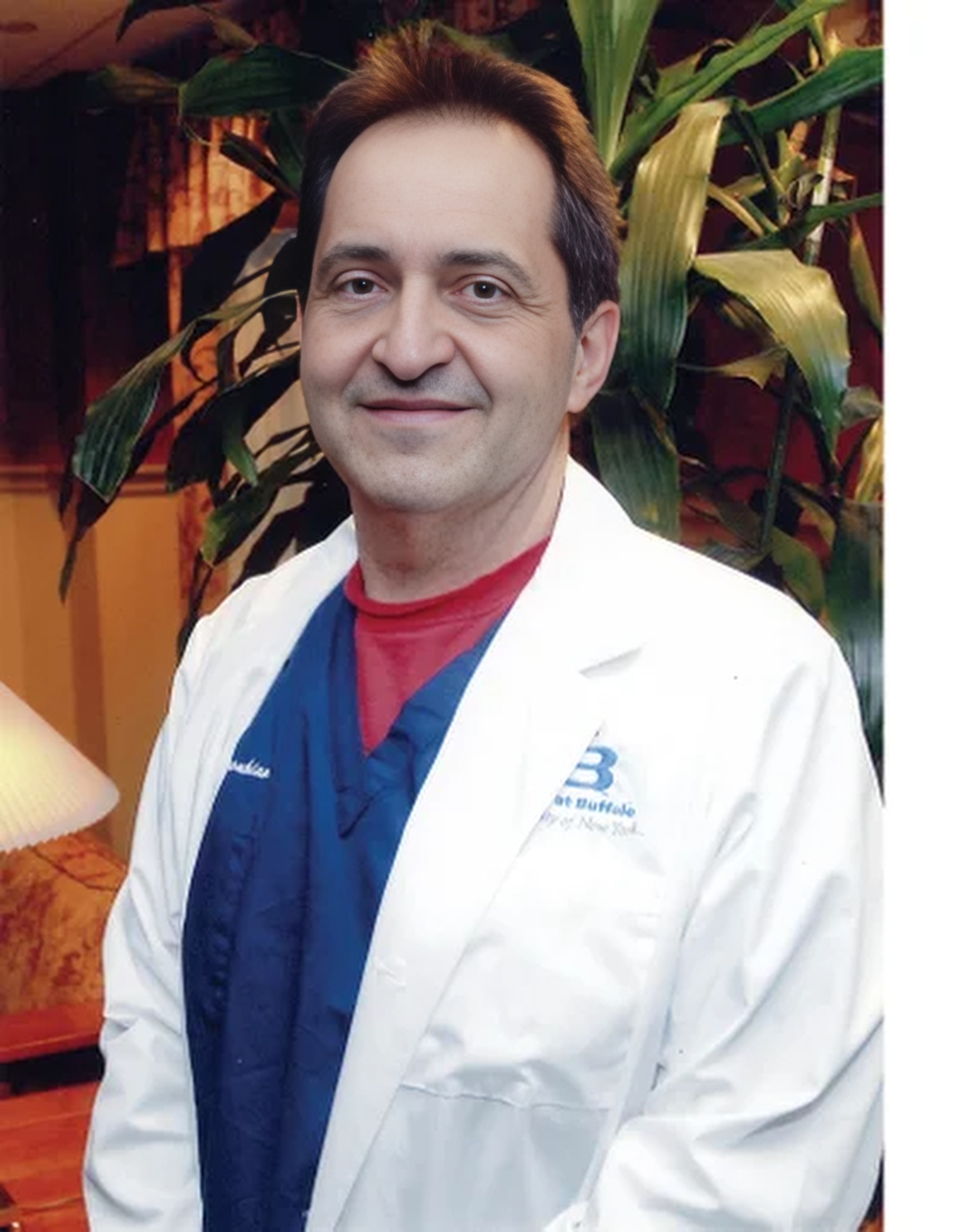
Dr. Hratch Karamanoukian, MD, FACS - Board Certified Phlebologist in Buffalo, New York

Dr. Hratch Karamanoukian, MD, FACS

Board Certified Phlebologist

Cardiac SurgeryThoracic Surgery
Buffalo, New York
● Taking New Patients
NPI: 1164612073· License: 188214 (NY) verify
Medical school: University Of Southern California Keck School Of Medicine · Graduated 1990
Industry payments (2024): $13 across 1 payment (what this means)
4.03(122 ratings)

About

Dr. Hratch Karamanoukian, a double board-certified surgeon and board-certified phlebologist, practices in the Buffalo, New York area, with offices in Williamsville and Orchard Park. Since 2005, his practice has focused exclusively on vein-only care. Dr. Karamanoukian emphasizes that varicose veins are more than a cosmetic concern, often causing symptoms like aching, heaviness, swelling, and leg fatigue. Untreated vein disease can progress, but patients do not need to wait for severe symptoms to seek evaluation. He offers personalized, minimally invasive, office-based treatments, performed without general anesthesia or a hospital stay. Dr. Karamanoukian personally performs every consultation, ultrasound review, and procedure, ensuring patients see the same experienced specialist at every visit. Most patients return to work the morning after treatment.

Connect with Dr. Hratch Karamanoukian on Social Media

Specialties

  • Board Certified Phlebologist

Procedures & Services

Select a service to schedule an appointment · each is approximately 60 minutes

Average Cost of Surgery

Healthcare costs shouldn't be a mystery. Below, you'll find crowdsourced data on the actual costs of surgeries performed by Dr. Hratch Karamanoukian, submitted anonymously by the patient community. Use this as a guide to better anticipate your own expenses. Please note that final costs can vary based on your specific medical needs.

Lip Fillers

$500

Belotero

$500

Juvederm

$600

Miradry

$1,700

Help us keep this data current and accurate. If you've had a procedure with Dr. Hratch Karamanoukian, please take a moment to contribute your cost information.

Questions, Answers, and Information Directly from Dr. Hratch Karamanoukian

Sourced directly from Dr. Hratch Karamanoukian's social posts and replies.

What are the typical recovery expectations after varicose vein treatment?
After varicose vein treatment, walking is encouraged immediately. More than 99% of patients return to work the very next morning. Modern treatments are performed in-office, without hospital stay or general anesthesia, and with very little downtime.
When is the best time of year to get varicose veins treated?
Fall, winter, and spring are considered ideal times to get veins evaluated and treated. This allows patients months to complete evaluation and staged treatments before the following summer, and compression stockings are often more comfortable under pants during cooler weather. Less sun exposure can also be helpful after certain vein procedures, especially sclerotherapy, to reduce the risk of pigmentation.
What are the risk factors for varicose veins?
Factors that can increase the risk of varicose veins include family history, pregnancy, prolonged standing, and obesity.
What are the different types of endovenous ablation treatments Dr. Karamanoukian offers for varicose veins?
Dr. Karamanoukian offers several endovenous ablation treatments. Endovenous laser ablation (EVLA/EVLT) uses thermal energy to close the vein and is highly effective for axial reflux, especially in advanced venous disease. Radiofrequency ablation (RFA) also uses thermal energy via a catheter and requires perivenous tumescent anesthesia; both EVLA and RFA have strong long-term closure data. Nonthermal options include Polidocanol endovenous microfoam (PEM/Varithena), which chemically ablates the vein and is useful for tortuous veins or below-knee reflux, avoiding multiple tumescent-anesthesia injections. Mechanochemical ablation (MOCA) combines mechanical injury with sclerosant, generally not requiring tumescent anesthesia and avoiding thermal nerve injury. Cyanoacrylate adhesive closure uses medical adhesive to close the vein, is nonthermal and non-tumescent, avoiding heat and most needle sticks, though hypersensitivity reactions are a consideration.
What is Lipodermatosclerosis and what are its symptoms?
Lipodermatosclerosis is an advanced sign of chronic venous insufficiency, classified as CEAP C4b chronic venous disease. It develops when long-term high pressure in leg veins causes inflammation, scarring, and hardening of the skin and tissues, particularly around the ankles and lower legs. It can be a warning sign that chronic venous disease has progressed significantly, increasing the risk for venous leg ulcers. Symptoms to watch for include hard or tight skin around the ankle, brown or bronze discoloration, swelling, pain or tenderness, and an “inverted champagne bottle” appearance of the lower leg. A venous ultrasound can help determine if underlying venous reflux or obstruction is contributing.
Can chronic venous insufficiency cause itching or skin changes?
Yes, itching of the lower legs, especially around areas with varicose veins, swelling, or brown skin discoloration, can be a symptom of chronic venous insufficiency. When leg vein valves malfunction, blood pools and increases pressure, leading to venous congestion and skin inflammation. This can cause itching, dry or flaky skin, redness or irritation, brown discoloration, and venous stasis dermatitis (venous eczema). In advanced cases, it can lead to skin breakdown or venous ulcers. If itching persists or is accompanied by other venous symptoms, it's worth evaluating your circulation.
How do compression stockings work and what are their limitations?
Compression stockings provide graduated external pressure that helps support the veins and move blood back toward the heart, working together with the natural calf-muscle pump to improve venous return. They are commonly recommended for conditions like varicose veins, chronic venous insufficiency, leg/ankle swelling, aching/heavy/tired legs, venous skin changes, and certain venous ulcers. However, compression stockings do not weaken leg muscles, nor do they replace the work of your muscles. Importantly, they can help control symptoms but do not eliminate damaged veins, cure venous insufficiency, or correct the underlying venous reflux.
Are there alternatives to traditional compression stockings?
Yes, for patients who cannot easily wear traditional compression stockings, alternative compression options are available. The practice prescribes custom compression inelastic garments that utilize a Velcro system, making them very easy for the patient or a helping family member to apply.
Where are Dr. Karamanoukian's office locations in the USA?
The Vein Treatment Center has two offices located in the local neighborhood: 5225 Sheridan Drive, Williamsville, NY, and 3680 Eggert Road, Orchard Park, NY.
What is chronic venous insufficiency and what are its symptoms?
Chronic venous insufficiency occurs when the valves inside the leg veins do not function properly, causing blood to flow backward and pool in the legs. This increased venous pressure, especially after prolonged standing or sitting, can contribute to symptoms such as heavy or tired legs, aching or throbbing, ankle or lower-leg swelling, nighttime cramping, itching, restless or uncomfortable legs, and varicose veins. Importantly, you do not need to have visible varicose veins to have venous insufficiency.
When should I consider getting my leg symptoms evaluated for venous issues?
If your legs feel heavy, tired, achy, or fatigued toward the end of the day, or if your legs feel better after walking, elevating them, or wearing compression stockings, a venous cause for your symptoms may be worth investigating. A venous ultrasound can evaluate the veins and determine whether abnormal backward blood flow (venous reflux) is present.
Does Dr. Karamanoukian practice internationally?
Yes, Dr. Karamanoukian practices in the USA, Lebanon, and Armenia.

Patient Experience

Dr. Hratch Karamanoukian Review Summary

4.6
Dr. Karamanoukian has excellent ratings, averaging 4.6 out of 5 stars. Patients consistently praise his expertise and bedside manner.

Ratings from Other Platforms

health.usnews.com

4 out of 5

Based on 228 reviews

View on health.usnews.com

Google Reviews

4.5 out of 5

Based on 16 reviews

View on Google Reviews
Dr. Hratch Karamanoukian, MD, FACS - Board Certified Phlebologist in Buffalo, New York

Main Office

5225 Sheridan Dr, Buffalo, New York

(716) 839-3638

Book a Service Consultation

Each service is approximately 60 minutes.

+4 more

Industry Payments

Federal law (the Physician Payments Sunshine Act) requires drug and medical-device companies to report anything of value they give to a physician — consulting and speaking fees, research funding, travel, royalties, and even meals. Medicare publishes all of it in a public database called Open Payments. We show it here so you don't have to go looking for it.

Total received (2024)

$13

Payments

1

Compared to peers

Small

Dr. Hratch Karamanoukian received $13 across 1 payment in 2024. That is in the lower half for physicians here — totals this size are typically meals at sponsored talks. Most of it was categorised as food and beverage, and the largest single payer was E.R. Squibb & Sons, L.L.C..

What this means for your care

  • A disclosed payment is a business relationship, not evidence of wrongdoing, and it says nothing on its own about the quality of your care.
  • Most payments are small. Across the physicians listed on NavMDs, the single most common category is food and beverage at industry-sponsored talks.
  • Larger consulting, speaking or royalty payments mean an ongoing financial relationship with a company whose products your doctor may use or recommend. That is worth knowing about, and it is reasonable to ask about.
  • A fair question to ask: “Do you have a financial relationship with the maker of the implant, filler or device you're recommending — and what alternatives did you consider?”

Source: CMS Open Payments, the federal database created by the Sunshine Act. View the full record on CMS Open Payments ↗

Insurance Information

Please contact Dr. Hratch Karamanoukian's office directly for information about accepted insurance plans.

Phone: (716) 839-3638

Help us improve this profile

Do you know which insurance plans Dr. Hratch Karamanoukian accepts? Share this information to help other patients.

Location & Contact Information

Main Office

5225 Sheridan Dr

Buffalo, New York 14221

Office Information

Phone: (716) 839-3638

Where does Dr. Hratch Karamanoukian practice?

Doctor's Office

Main Office (Primary)

5225 Sheridan Dr, Buffalo, New York 14221

(52 reviews)

Hospital Affiliations

Hospital affiliations unknown

Do you know which hospitals Dr. Hratch Karamanoukian is affiliated with? This information helps patients understand where they might receive care.

Education & Experience

Education

University Of Southern California School Of Medicine

Certifications & Licenses

Board Certified Phlebologist
Certified By The American Board Of Venous And Lymphatic Medicine
Dabvlm
Fellow Of The American College Of Surgeons (Facs)
Registered Vascular Technologist (Rvt)
Registered Physician Vascular

Frequently Asked Questions

Can you make an appointment with Dr. Hratch Karamanoukian online?
This information is not available based on the provided details. Please contact the office directly at (716) 839-3638 to inquire about online appointment scheduling.
Does Dr. Hratch Karamanoukian offer telehealth?
This information is not available based on the provided details. Please contact the office directly at (716) 839-3638 to inquire about telehealth options.
What do patients have to say about Dr. Hratch Karamanoukian?
Patients rave about Dr. Karamanoukian, describing him as the "best around" and praising his knowledge, explanations, and the comfortable atmosphere he and his staff create. He receives particularly high marks for lip filler procedures, with patients noting "incredible transformations" and "beautiful natural looking lips." His expertise in vein issues is also frequently highlighted.
What areas of care does Dr. Hratch Karamanoukian cater to?
Dr. Karamanoukian's areas of care include venous disorders (such as varicose veins, DVT, and ulcers), hyperhidrosis (excessive sweating), minimally invasive cardiac and thoracic surgery, robotic surgery, and cosmetic procedures like lip fillers. He also performs procedures such as VenaSeal, sclerotherapy, and EVLT. Dr. Karamanoukian emphasizes that varicose veins are more than a cosmetic concern, often causing symptoms like aching, heaviness, swelling, itching, and leg fatigue. Untreated vein disease can progress to severe complications including skin discoloration, bleeding, inflammation, and venous ulcers. Patients do not need to wait for severe symptoms to seek evaluation. Treatment selection is personalized, based on anatomy, physician expertise, and patient preference. Current guidelines recommend endovenous ablation over surgical stripping for appropriate patients with GSV or SSV axial reflux. For distal calf saphenous reflux, nonthermal techniques are preferred to avoid thermal nerve injury. The practice has exclusively focused on vein-only care since 2005, with Dr. Karamanoukian personally performing every consultation, ultrasound review, and procedure.