
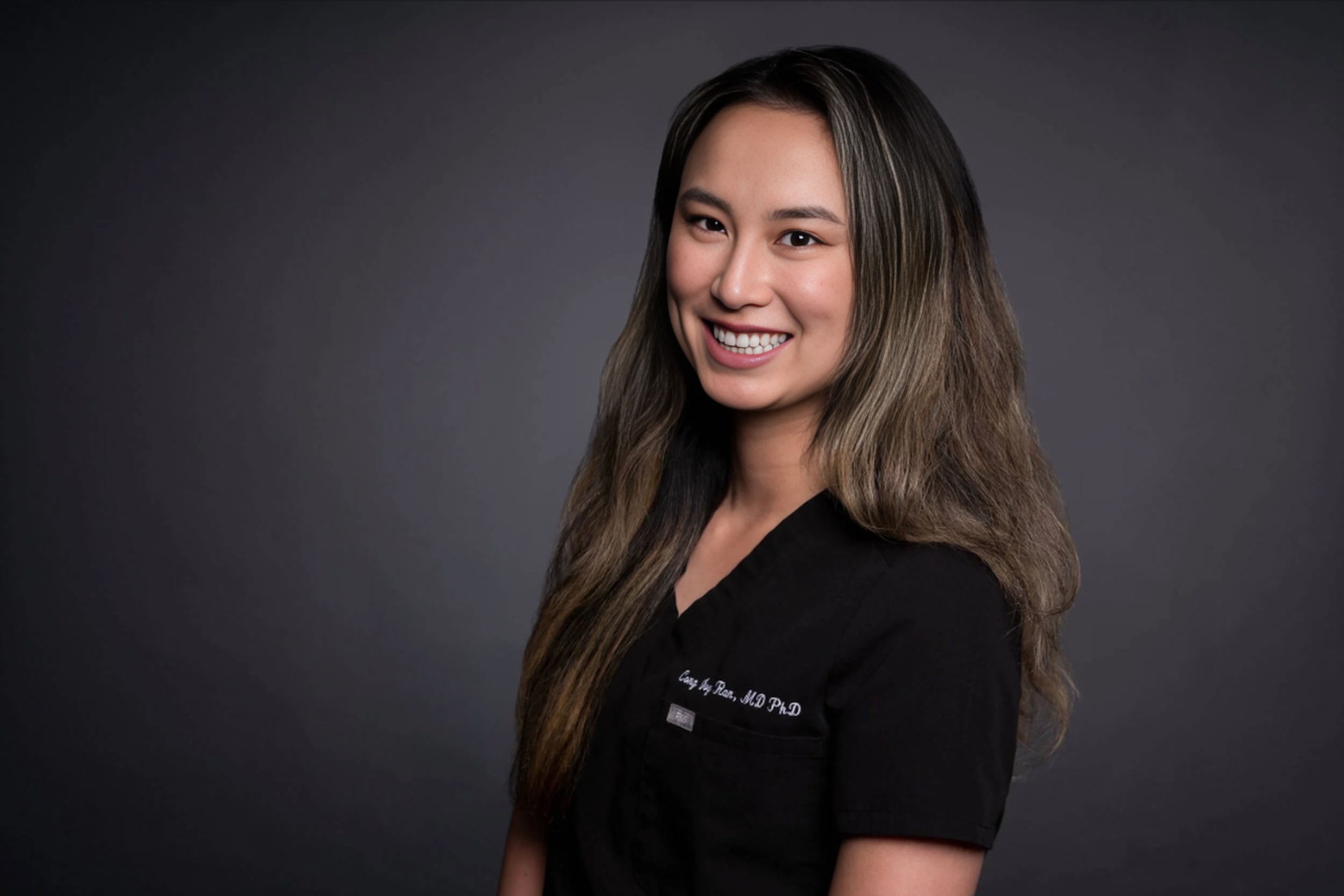
Dr. Cong Ivy Ran, MD
Board Certified Otolaryngologist
In Dr. Cong Ivy Ran's own words
How Dr. Cong Ivy Ran describes their own approach, from their TikTok posts. Each statement links to the original.
Specialization
- I'm a facial plastic surgeon who focuses on Asian beauty and Asian aestheticsTikTok ↗
Safety
- This is why I caution patients to go get injections outside of the United States where they can't guarantee where the products are coming from. I want to caution everyone against getting injections from foreign countries- you don't know where the products are coming from!TikTok ↗
Statements are quoted or closely paraphrased from Dr. Cong Ivy Ran's own public posts and are their claims, not NavMDs' medical advice. Doctors can correct or remove any item via their claimed profile or support [at] navmds.com.
About
Connect with Dr. Cong Ivy Ran on Social Media
Specialties
- Board Certified Otolaryngologist
Procedures & Services
Select a service to schedule an appointment · each is approximately 60 minutes
Questions, Answers, and Information Directly from Dr. Cong Ivy Ran
Sourced directly from Dr. Cong Ivy Ran's social posts and replies.
Videos from Dr. Cong Ivy Ran
@dr2ran on TikTok →Videos posted on TikTok by @dr2ran. Press play to watch here, or open the original on TikTok.
Did you know that not all double eyelids are the same? In fact, there are five different categori…
44.7K views · Jan 2024 · TikTok ↗
👉 What is Alar Base Reduction? Alar base reduction is a procedure that focuses on reshaping the…
39K views · Sep 2023 · TikTok ↗
I have done a series of asian beauty trends that are “weird”/“different” from the western standar…
38.3K views · Jul 2023 · TikTok ↗
CAUTION: Don't Get Injections from Unregulated Sources - A patient of mine recently came in seeki…
17.1K views · Sep 2023 · TikTok ↗
So.. Asians do age and some may argue even we raisin faster than caucasians. Here’s why.
11.5K views · Aug 2023 · TikTok ↗
Sub-Brow Lift: An Alternative to Eyelid Surgery for Laxity. This is a surgery gaining popularity…
11.2K views · Oct 2023 · TikTok ↗
Technologies & brands Dr. Cong Ivy Ran mentions
Devices, implants, injectables and products named in Dr. Cong Ivy Ran's own posts and videos. A mention is not an endorsement; ask the office what they currently offer.
Patient Experience
Dr. Cong Ivy Ran Review Summary
Ratings from Other Platforms
Main Office
11600 Wilshire Blvd ste 324, Los Angeles, California
Book a Service Consultation
Each service is approximately 60 minutes.
Industry Payments
Federal law (the Physician Payments Sunshine Act) requires drug and medical-device companies to report anything of value they give to a physician — consulting and speaking fees, research funding, travel, royalties, and even meals. Medicare publishes all of it in a public database called Open Payments. We show it here so you don't have to go looking for it.
Total received (2024)
$529
Payments
10
Compared to peers
Modest
Dr. Cong Ivy Ran received $529 across 10 payments in 2024. That is higher than about 56% of the physicians here who received any industry payment. Most of it was categorised as food and beverage, and the largest single payer was Stryker Corporation.
What this means for your care
- A disclosed payment is a business relationship, not evidence of wrongdoing, and it says nothing on its own about the quality of your care.
- Most payments are small. Across the physicians listed on NavMDs, the single most common category is food and beverage at industry-sponsored talks.
- Larger consulting, speaking or royalty payments mean an ongoing financial relationship with a company whose products your doctor may use or recommend. That is worth knowing about, and it is reasonable to ask about.
- A fair question to ask: “Do you have a financial relationship with the maker of the implant, filler or device you're recommending — and what alternatives did you consider?”
Source: CMS Open Payments, the federal database created by the Sunshine Act. View the full record on CMS Open Payments ↗
Insurance Information
Please contact Dr. Cong Ivy Ran's office directly for information about accepted insurance plans.
Help us improve this profile
Do you know which insurance plans Dr. Cong Ivy Ran accepts? Share this information to help other patients.
Location & Contact Information
Main Office
11600 Wilshire Blvd ste 324
Los Angeles, California 90025
Office Information
Where does Dr. Cong Ivy Ran practice?
Doctor's Office
Main Office (Primary)
11600 Wilshire Blvd ste 324, Los Angeles, California 90025
Hospital Affiliations
Help improve our data. Confirm if Dr. Cong Ivy Ran is affiliated with She founded FlowMD Aesthetic Center.
Education & Experience
Education
Certifications & Licenses